
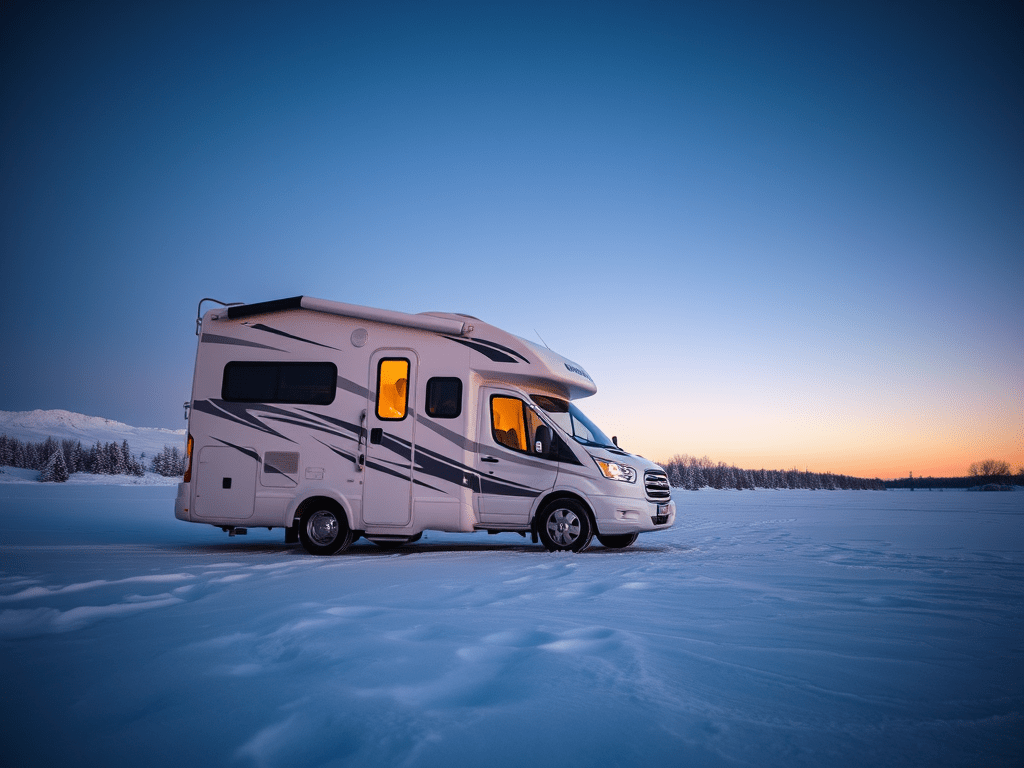
A practical, field-tested guide for RVers facing real winter conditions — not just cold nights.
Winter RV living isn’t about comfort — it’s about system integrity.
When temperatures drop below freezing, every part of your rig becomes a liability if it’s not managed deliberately: water lines, tanks, seals, power, heat, and access.
This guide isn’t theory or campground folklore. It’s a practical checklist built from real winter conditions, real failures, and the habits that keep RV systems working when cold stops being a novelty and starts being a problem.
What to Expect When You Commit to Winter RVing
Reality check…
- ❄️ Cold turns time into a factor — small mistakes compound overnight
- 💧 Water systems become the highest-risk failure point
- 🔌 Electrical loads increase significantly (heaters, heat trace, battery draw)
- ❄️ Snow and ice restrict access to valves, hookups, and exits
- 🧠 Daily checks replace “set and forget” habits
If you’re expecting winter RVing to feel like camping with a heater, stop here.
If you’re prepared to manage systems daily, read on.
Site & Orientation Checklist (Before You Settle In)
Checklist:
- ☐ Choose a site with natural drainage (meltwater must flow away)
- ☐ Orient the RV so sewer run is downhill end-to-end
- ☐ Avoid low spots where cold air pools overnight
- ☐ Ensure you can access valves and hookups after snowfall
- ☐ Confirm plow paths won’t bury sewer or water connections
Gravity is your friend in winter. If waste or water has to fight uphill, it will lose.
Water System Strategy (Critical Section)
Fresh Water
Checklist:
- ☐ Use a heated or heat-traced water hose rated for continuous freezing temps
- ☐ Protect the hose connection at the spigot (this is where most freezes occur)
- ☐ Insulate and shield the inlet from wind
- ☐ Maintain a slight overnight drip only if grey water sewer run is downhill and open
- ☐ Know where your shutoff is and keep it accessible
A slow drip keeps water moving, but only works if gravity and drainage are working with you. Standing water freezes faster than still air.
Sewer & Tank Management (This Is Where Most People Get It Wrong)
Checklist:
- ☐ Black tank valve stays CLOSED until dumping
- ☐ Grey tank may remain open only if:
- constant downhill slope
- no low spots
- no exposed horizontal runs
- ☐ Dump only during warmest part of day
- ☐ Flush hoses immediately after dumping
- ☐ Never leave black and grey valves both open
Leaving a black tank valve open in winter is how you create a frozen sewer pipe full of solids. Plus, the valve will freeze open, which is disastrous if you’re planning on breaking camp in the morning. Don’t do it… EVER!
Heat Trace & Insulation (Use It Correctly or Don’t Use It)
Checklist:
- ☐ Heat trace only where freeze risk actually exists
- ☐ Never overlap heat trace cables
- ☐ Use heat trace with thermostatic control, not constant-on cheap cable
- ☐ Insulate over heat trace, never under it
- ☐ Protect heat trace from abrasion and UV
- ☐ Confirm electrical load capacity before installing
Heat trace is not a blanket solution. It’s a targeted tool. Used correctly, it prevents freezes. Used poorly, it creates new failure modes.
Interior Heat & Airflow
Checklist:
- ☐ Maintain even airflow to underbelly spaces
- ☐ Avoid closing off heat registers feeding tanks or plumbing
- ☐ Use supplemental heaters carefully — load and ventilation matter
- ☐ Monitor humidity to prevent condensation and mold
- ☐ Keep cabinet doors open in extreme cold
Snow, Ice & Access Management
Checklist:
- ☐ Keep roof vents and exhausts clear
- ☐ Remove snow buildup before melt–refreeze cycles
- ☐ Keep steps, exits, and paths clear daily
- ☐ Mark sewer and water lines so you can find them after snowfall
- ☐ Store a shovel where it won’t freeze shut
Daily Winter RV Check (Print This)
Daily checks:
- ☐ Confirm water flow
- ☐ Check hose and spigot for ice
- ☐ Verify sewer slope is clear
- ☐ Listen for unusual pump cycling
- ☐ Inspect heat trace operation
- ☐ Clear snow from critical areas
Five minutes a day prevents five hours of repair in the cold.
Winter RV living works when you treat your rig like a system, not a shelter.
Manage water deliberately, respect gravity, and assume the cold will exploit any shortcut you take.
Do that, and winter becomes not just manageable and even predictable, but enjoyable.
 ColdTech Systems