

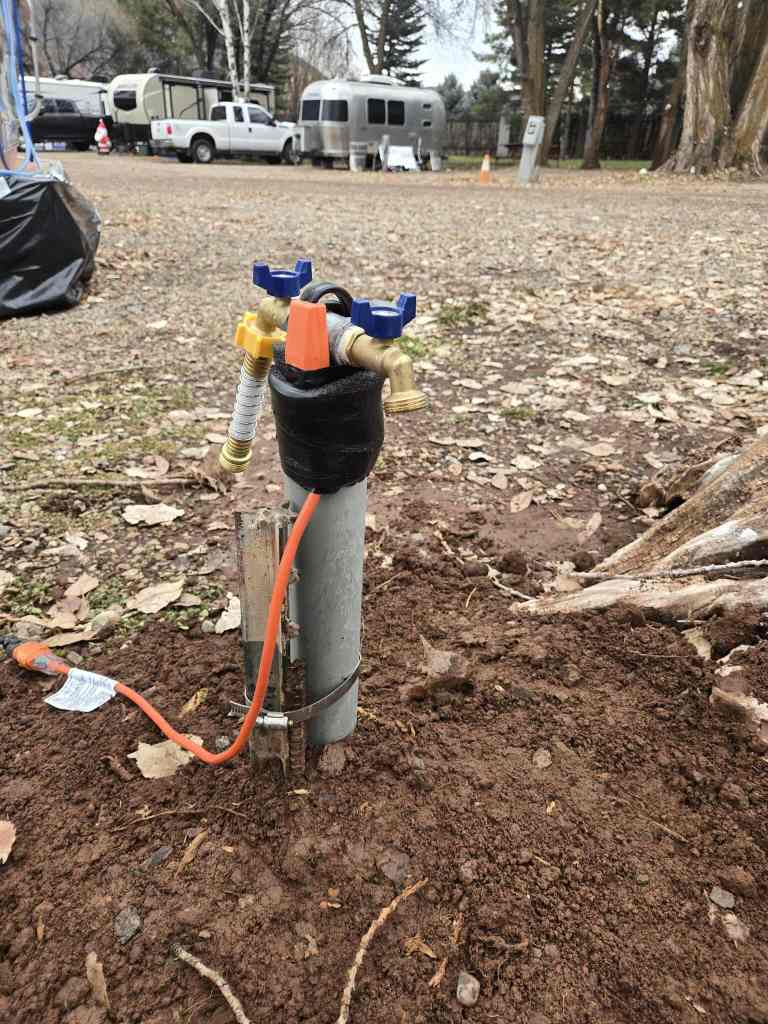
This is a simple heat-trace install on a water riser, but there are a couple of crucial details we’ve seen a lot of people getting wrong.
Instead of wrapping the heat trace in loops around the pipe, we run it straight along the riser. A straight run gives a far more consistent heat transfer and avoids creating hot spots, especially on vertical installations. This is critical when you’re working with PVC or PEX pipes.
We dig down to the known frost line, and run the trace all the way down the pipe to just below the local frost depth. If you only run heat on the exposed aerial section of the pipe, you’ve just effectively shifted the freeze point lower in the system.
From there, we bring it back up the opposite side of the riser (it is important to follow the manufacturer guidelines with this, because stacking heat trace in one location can create localized hot-spotting), then insulate over the top of the heat trace with closed cell pipe insulation foam. (NOTE: The correct choice of insulation is everything here. Open-cell foam isn’t appropriate in freeze-protection systems; it absorbs moisture, traps water against the pipe, loses thermal performance when wet, and can create unpredictable thermal behavior around the heat trace. Closed-cell insulation or fiberglass wrap is far more suitable when installed according to manufacturer temperature and application guidance.).
We then add a protective, 2inch PVC sleeve over the top of everything, and finish back out with the new faucet.
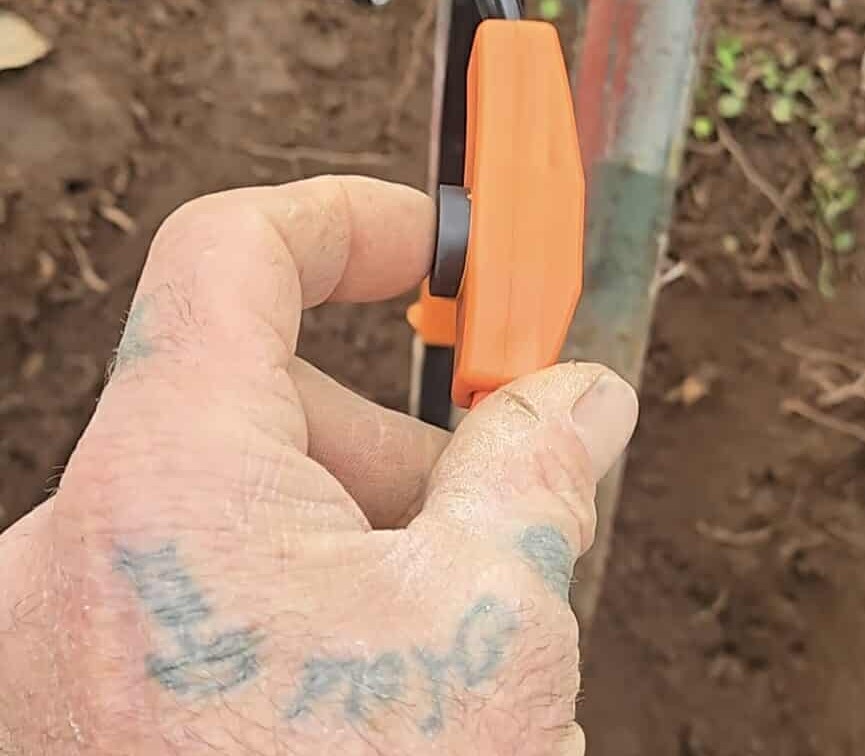
This style of heat tape uses a simple thermostat puck that sits against the pipe. When the pipe temperature drops near freezing, it energizes the heat trace and warms the line. When the pipe temperature is above freezing, it stays off. It’s not a smart system, it just reacts to pipe temperature, so placement and coverage really matter.
If you want to keep exterior faucets and yard risers from freezing, the key is:
cover the full freeze zone, go below frost depth, keep the run straight, and finish it with insulation and a weather-protected sleeve.
These systems should be powered through a GFCI-protected outlet wherever required by code and the Heat Trace manufacturer. We always treat GFCI protection as a best-practice safety measure for freeze-protection installations.
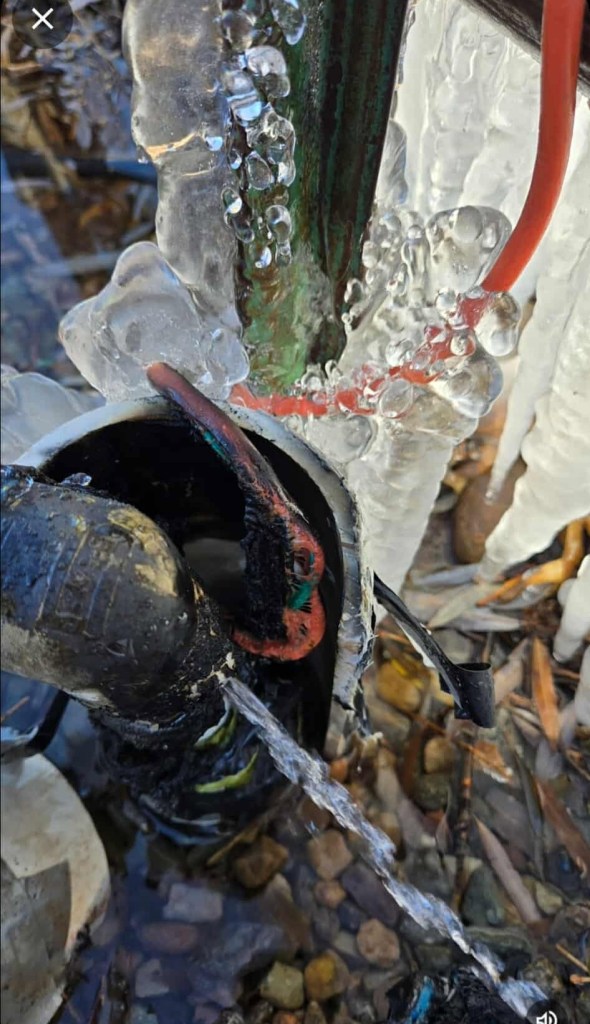
Final notes of caution… Leaving the thermostat puck exposed to ambient air instead of in contact with the pipe can cause the system to remain energized continuously. In installations where the tape is also wrapped over itself, we’ve seen this lead to excessive localized heating and pipe failure under pressure.
Article & Photos: CJ Sawyer
 ColdTech Systems